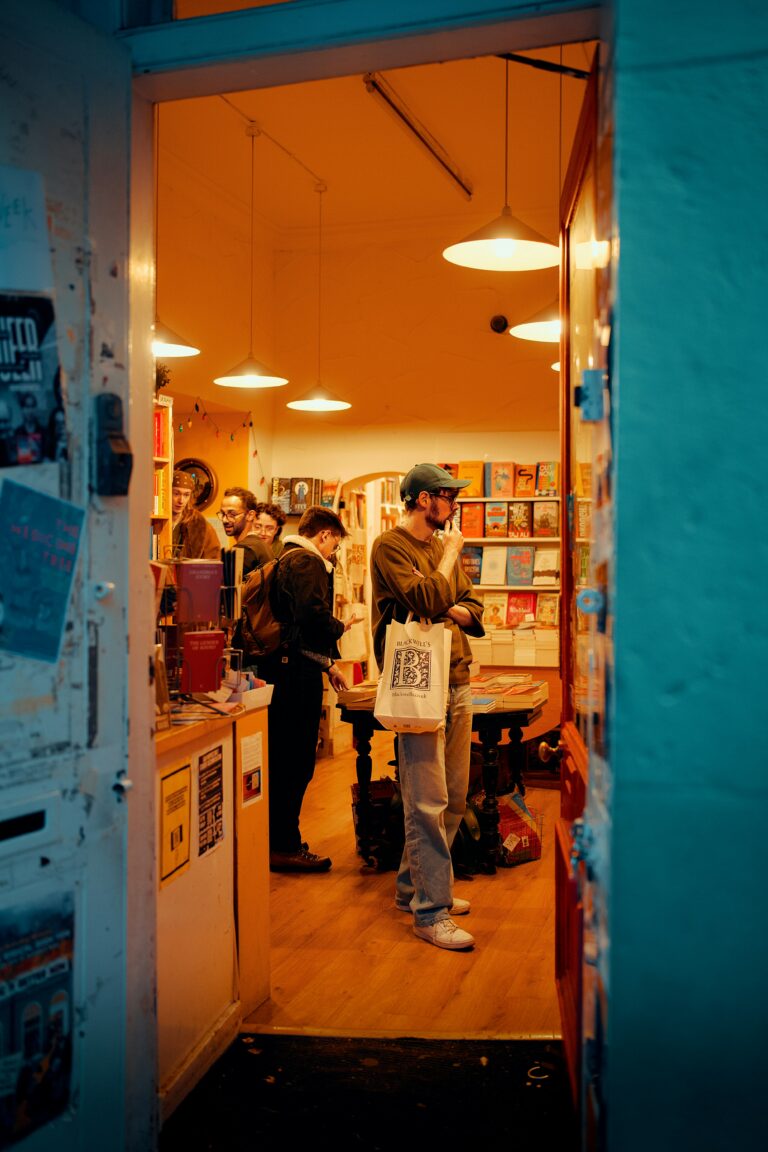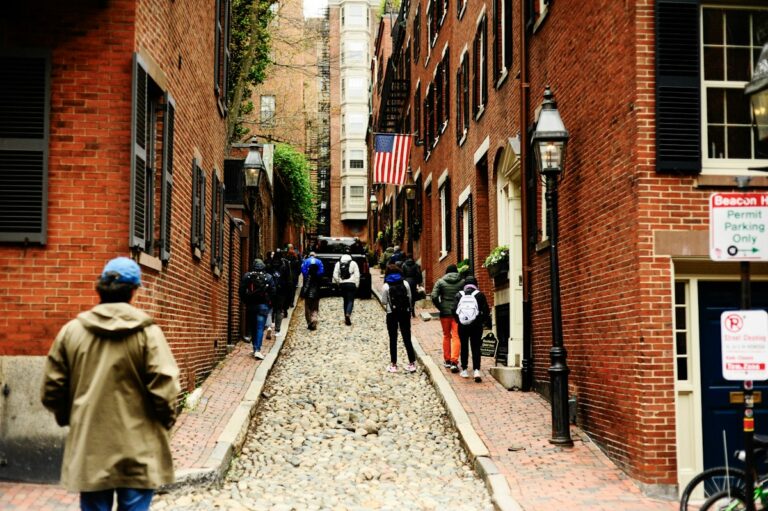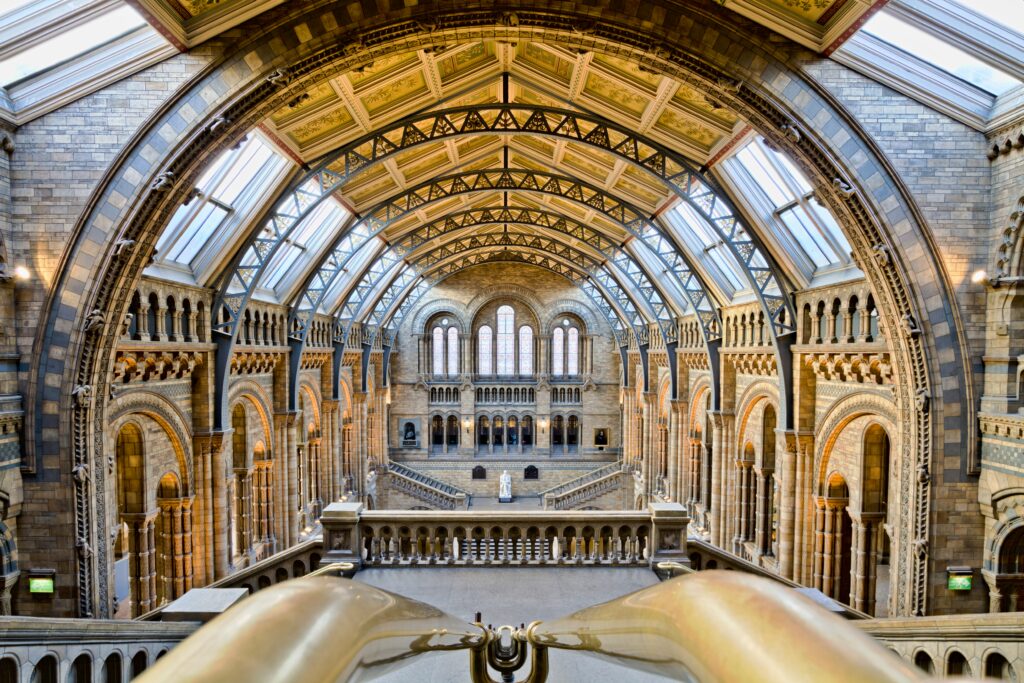
You don’t need the word “entablature” to notice that one building on a block seems dressed for a different occasion than its neighbors. That noticing is most of the skill. Travel for architecture runs on a habit of looking, not a vocabulary, and the habit can start at the nearest front door.
The jargon can come later, if at all. Even Historic England’s Heritage Calling blog treats looking up building-part names in an architectural dictionary as one research step among several, not an entry exam.
Start at the front door
Doors are where a building is at its most deliberate. Stand across the street first and notice whether the entrance sits up a flight of steps or level with the sidewalk. Steps can put distance between a household and the street; a shop door at sidewalk level invites you in.
Then look closer: hinges, knocker, the glass above the frame. The same Historic England guide notes that people who date buildings consult reference books on fittings, right down to door hinges. Nobody dates a house from the sidewalk. Still, you’ll start catching the modern handle bolted onto a much older door, which is its own small story.
The common mistake is photographing a private entrance from its top step. If someone lives there, it’s a front door, not an exhibit.
Read the material before the style
Ask what the building is made of, and what that might have cost. Stone, timber, stucco, and concrete each hint at a place’s climate, money, and supply lines.
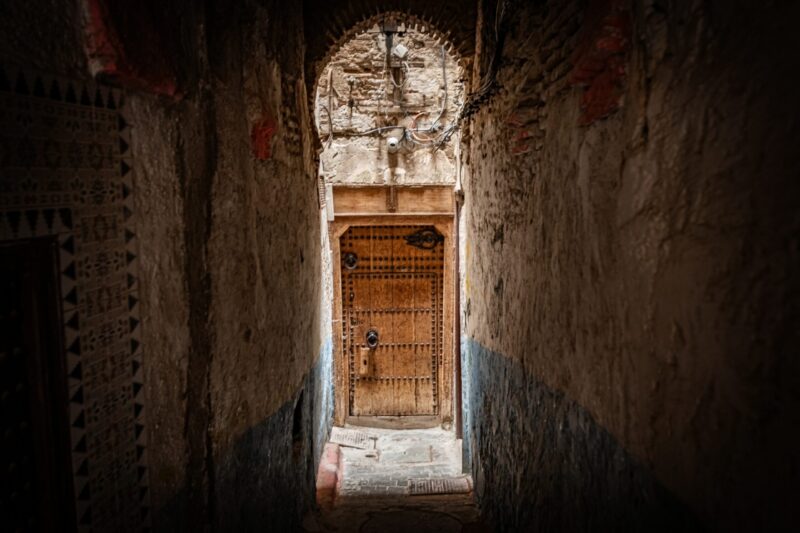
Brick is the easy starting point because the pattern sits at eye level. Are you seeing the long sides of the bricks, the short ends, or both? Peterborough Archaeology dates both patterns in English houses. English bond, a row of short ends laid over a row of long sides, goes back to the 16th century. Flemish bond, which alternates the two within each row, became standard from the early 18th century. Treat that as an English timeline, not a global rule. Elsewhere, a local heritage body’s guide is the place to check.
Look at the neighbors
A building rarely makes sense alone. Walk to the corner and check whether rooflines match and balconies line up. A street that agrees with itself often points to a rulebook or a single developer.
Paris makes the point well. A Paris property agency’s Haussmann guide places the strict style between 1853 and 1870. It notes balconies along the second and fifth floors, with bay windows arriving in the decades after. French floors are counted from above the ground floor, so that “second floor” is an American third. Spot the two balcony lines and you can follow them down a boulevard.
Guess the design period in plain language
Skip the style names and sort what you see into three rough piles.
- Handmade-looking: thick walls, smaller windows, ornament that varies slightly from piece to piece.
- Machine-age: repeated decoration that looks cast rather than carved, bigger windows, visible iron or steel.
- Modern: ornament stripped away, flat surfaces, the structure doing the decorating.
These are a traveler’s shortcuts, not academic categories, and revival styles muddy them on purpose. A 20th-century bank can turn up dressed as a Roman temple. Look up the one building that puzzles you; a single good answer tends to stick better than a glossary.
Plan travel for architecture around open days
Interiors are the hard part, since many belong to offices and private homes. Open House festivals are built around letting the public into buildings like these. Open House Worldwide describes a network of 60 organizations. It reports nearly 610,000 participants making more than 1.8 million visits in 2023. Scotland’s Doors Open Days comes from a related tradition. Edinburgh’s Cockburn Association traces the idea to France in 1984 and its UK arrival to Glasgow in 1990.
The tradeoff is queues. Some sites require advance booking, so check each festival’s own program for this year’s dates and booking rules rather than an old listing. Before assuming a building opens at other times, check its official page.
What you can skip is the urge to see everything. Three buildings looked at properly are likely to stay with you longer than twelve photographed through a bus window. The first can be the door at the end of your hotel’s street.