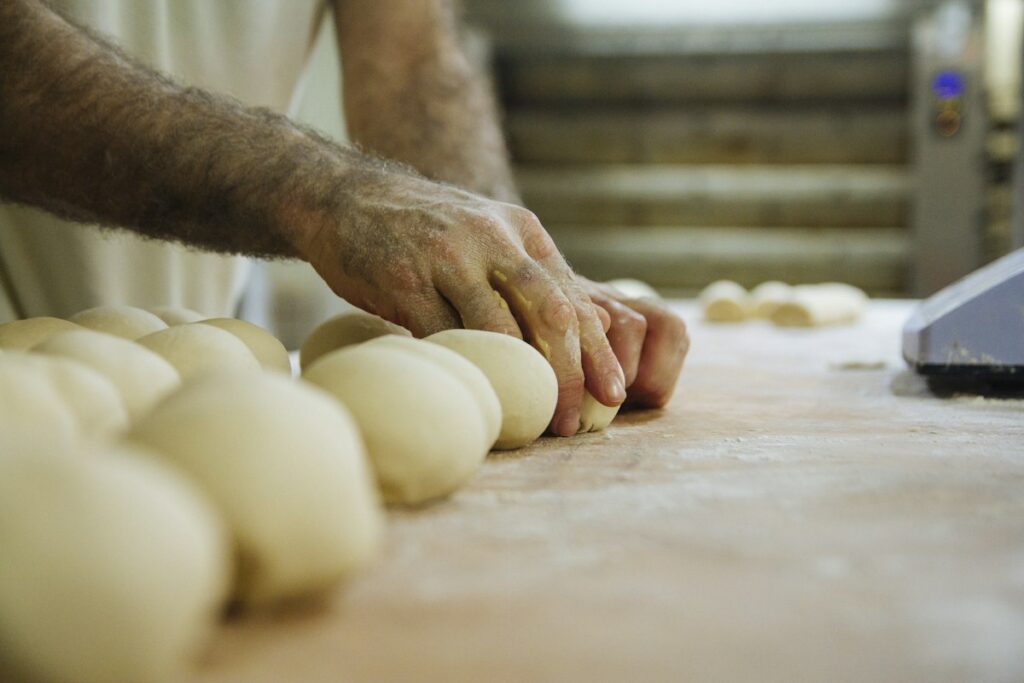
Sourdough keeps time in an odd way. Each batch borrows a lump of the one before it, so today’s loaf is the newest installment in a very long serial. Repeat that habit every morning for decades and you have the beginning of an answer to a bigger question: why does a neighborhood bakery sometimes outlast the people who opened it and turn into a landmark instead of just a place to pick up bread?
The starter that carries a bakery forward
San Francisco’s Boudin Bakery dates itself to 1849, when Isidore Boudin, a baker from Burgundy, started working in a Gold Rush town. The company says a piece of its original mother dough has gone into every sourdough loaf since. That unbroken line is the bakery’s claim, and no outsider can audit it batch by batch. The ritual behind it is ordinary and real: feed the starter, divide it, bake, repeat.
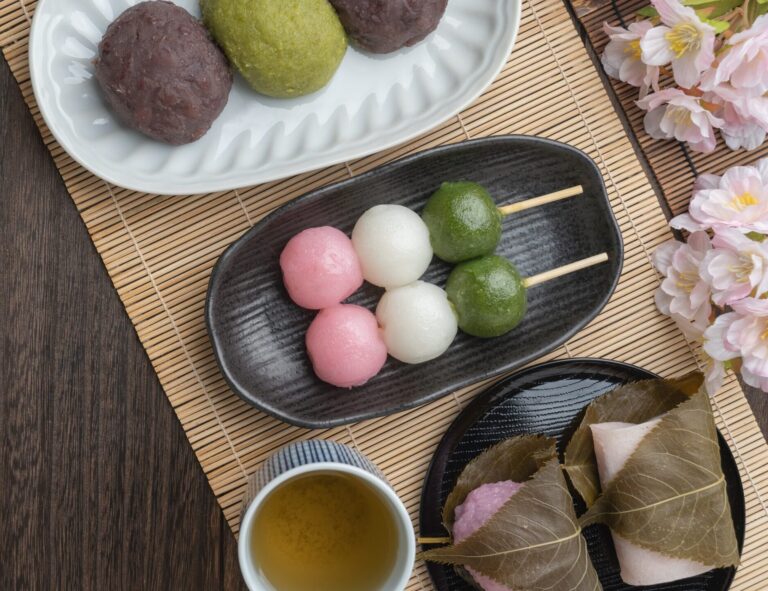
Tokyo has a parallel with a different ferment. Ginza Kimuraya, founded in 1869, introduced its first anpan in 1874. Anpan is a soft roll filled with sweet azuki bean paste, and Kimuraya raised its dough with sakadane, a starter associated with sake brewing. According to a Tokyo guide, the bakery’s sakura anpan was presented to Emperor Meiji in 1875. A bread can become a landmark when it marks the moment a city began eating something new.
A secret recipe is also a story
In Lisbon, the story begins with a closure. As the city’s tourism board tells it, Portugal closed its monasteries in 1834, in the aftermath of the 1820 liberal revolution. Someone from the Jerónimos Monastery in Belém began selling sweet pastries from a shop attached to a nearby sugar refinery, and in 1837 the baking of the custard tarts began there. In the house’s telling, the recipe has stayed with master confectioners who work in a “secret room.”
That is the bakery’s version, and secrecy means nobody outside can check it. Still, look at what the secret does. Custard tarts are baked all over Portugal and far beyond, yet this one recipe, tied to this one address, comes with a story no competitor can borrow. The secret works as a recipe and as a reason to cross town.
Family, by blood and by sale
The family histories behind long-lived bakeries rarely run in a straight line. Antonio Veniero arrived in New York from Italy in 1885 and was working in a candy factory at 15. By 1894, Village Preservation notes, he had bought 342 East 11th Street, a tenement built in 1865 and 1866, where the business began as a social club, pool tables included. In 1970 the shop was sold to a cousin, Frank Zerilli.
Boudin’s line bends too. In 1941, during a stretch of financial trouble, the Boudin family sold the business to Giraudo. In both cases what carried on was the bread and the pastry, more than the surname on the paperwork.
Why a neighborhood bakery stays at one address
That detail about Veniero buying the building is easy to skim past. It probably shouldn’t be. A bakery that owns its walls has more room to wait out a slow decade than one facing a lease renewal. Staying put also gives regulars a fixed point: the same corner, the same window, the same polite standoff over the last cannoli.
Paris has the extreme case. Stohrer opened in 1730 and has held the same space on rue Montorgueil for close to 300 years. Its best-known pastry, the baba, arrives with a tale about a deposed Polish king, a cake gone dry, and a rescue soak in sweet wine. Even Atlas Obscura introduces that one as legend, which is the right label for it.
Read the paperwork behind these places and the unchanging recipe turns into a run of handoffs: a pastry trade that outlived a monastery, a family selling up in a lean year, a cousin taking over the counter. The recipe gets its name on the sign. The people are the reason anyone is still baking it.