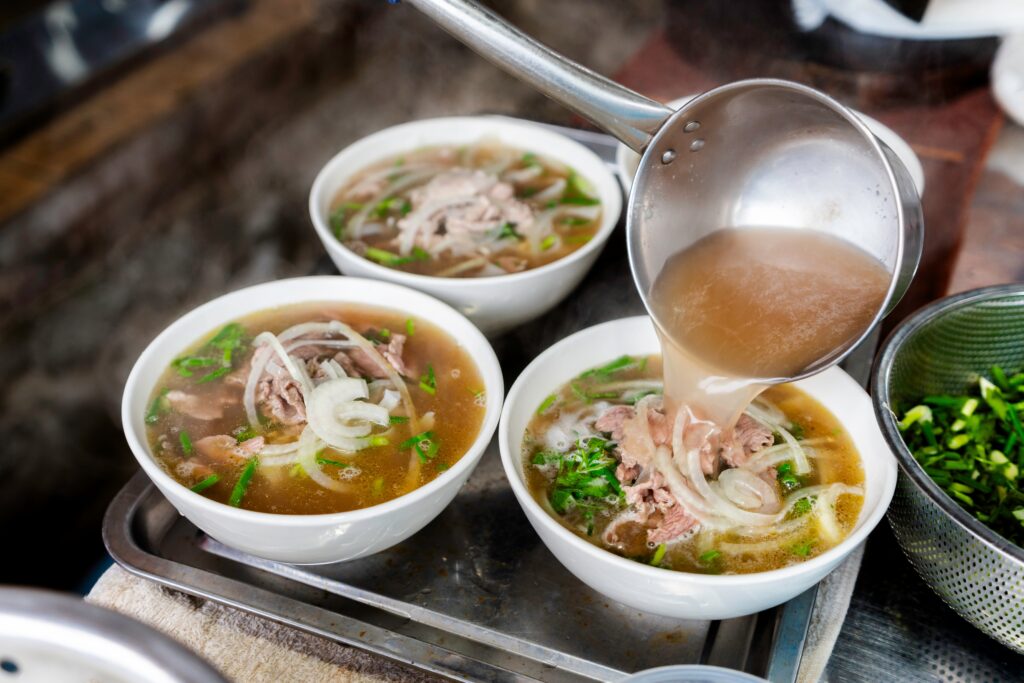
Order pho in Ho Chi Minh City and the soup is only part of what reaches the table. A plate of bean sprouts and herbs usually comes with it, along with sauces for the diner to add, so the meal starts with a little assembly. In Hanoi the same dish tends to arrive closer to finished, with a few restrained extras and a broth judged mostly on how clean it tastes. Same noodle, same country, two answers to the question of who finishes the bowl.
That split is a handy key to regional noodle traditions more broadly. The name on the menu tells you less than the place behind it. Most bowls come down to three choices: what goes into the broth, what the noodle is made of and how it’s handled, and who decides on the toppings. Learn to notice those, and an unfamiliar menu gets a lot easier to read.
Start with the broth, including its temperature
Pho is a good first lesson because both main styles start from the same pot. According to National Geographic, cooks in the north and south alike parboil marrow-rich beef bones.
They then simmer the bones for as long as 12 hours with onion, ginger and warm spices such as star anise, cinnamon, cardamom and coriander. The seasoning is where the styles part. Northern cooks keep the spice light and prize clarity. When the country was divided in 1954, many northerners moved south and took pho with them. There the broth drifted sweeter, darker and richer. An Oakland cook in the same story still sweetens his with rock sugar.
Broth doesn’t have to be hot, either. Naengmyeon simply means cold noodles. The Pyongyang style is traditionally a winter dish, served in an icy broth of dongchimi, a watery radish kimchi, as Korean Bapsang explains. A first-timer might read the chill as a summer shortcut. It’s the whole idea.
Texture comes from the flour, then the hands
Naengmyeon also shows how much the flour matters. Pyongyang-style noodles lean heavily on buckwheat, while Hamhung-style noodles are made mostly from potato or sweet potato starch and tend to be noticeably chewier. The Hamhung name usually attaches to bibim naengmyeon, which is tossed in a spicy sauce instead of floating in broth. That makes two cities, two doughs and two quite different meals under one word.
In Lanzhou, capital of China’s Gansu province, the variable is the pull. Lanzhou beef noodles are stretched by hand. The Baidu Baike entry on the technique lists nine standard shapes, from extra-wide ribbons to hair-thin strands. Whatever the width, the cook is after chew. If a bowl of hand-pulled or starch-based noodles pushes back against your teeth, that’s usually deliberate, not a sign the pot came off the heat too soon.
Toppings: who gets the last word
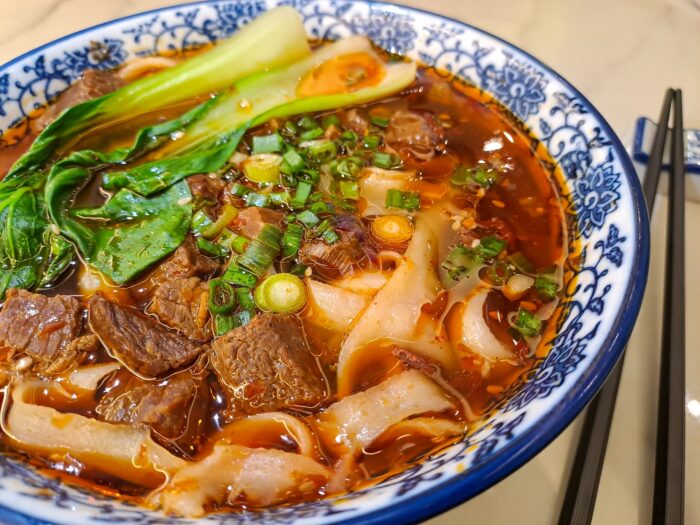
Some traditions finish the bowl in the kitchen. Lanzhou beef noodles are commonly described with a five-color shorthand, which the same encyclopedia entry spells out. The broth is clear and the radish slices are white. The chili oil adds red, cilantro and garlic sprouts add green, and the noodles have a faint yellow sheen. Every element has a job, and they all arrive in place.
Southern pho hands that job to the diner. The herb plate, sprouts and sauces turn the table into a small workshop. If the table is shared, there’s also a quiet negotiation over the last of the basil. Northern pho sits closer to the Lanzhou approach. Its short list of extras, such as pickled garlic, chili sauce and lime, leaves the broth in charge.
What to skip when exploring regional noodle traditions
Skip the urge to crown a winner. A clear, gently spiced Hanoi broth and a sweeter, herb-heavy southern bowl were built for different palates, and neither is a failed copy of the other. Skip policing what counts as “authentic,” too. These dishes have traveled with the people who cook them for generations, which is part of how pho ended up simmering in Oakland.
One habit is worth keeping: taste the broth before you reach for anything else. A sauce bottle on the table is an option, not an instruction.
The first spoonful tells you what the cook had in mind, and that’s useful to know before you start making the bowl your own.